हिंदी में पढ़े : स्वस्थ तन एवं स्वस्थ मन: सफलता और खुशहाल जीवन का रहस्य
Introduction
We spend years building our careers, improving our finances, and planning for a better future. We work hard to achieve success, provide for our families, and create a comfortable life.
Yet, in this pursuit of achievement, many of us overlook the very thing that makes all these accomplishments meaningful—our health.
Health is one of the greatest assets a person can possess. However, many people associate health only with a strong body, an attractive appearance, or physical fitness. In reality, health is much broader than that.
According to the World Health Organization (WHO), health is not merely the absence of disease but a state of physical, mental, and social well-being. A truly healthy life is one in which both the body and the mind function in harmony.
After all, a healthy body alone cannot guarantee happiness, and a positive mindset alone cannot overcome every challenge. Real well-being emerges when we have the energy to live, the mental strength to cope, and the emotional balance to enjoy life.
The Hidden Health Crisis of Modern Life
Modern life has made us more connected, productive, and ambitious than ever before. Yet it has also created new challenges.
Work deadlines, academic pressure, financial responsibilities, family obligations, and constant digital stimulation leave little room for rest and recovery.
As a result:
– Eating habits become irregular.
– Sleep is often sacrificed.
– Physical activity decreases.
– Stress and anxiety increase.
– Mental and physical health gradually begin to suffer.
This is why many people appear successful and healthy on the outside while silently struggling with exhaustion, stress, burnout, or emotional fatigue.
We invest significant time and effort into building better careers and brighter futures. But if our body and mind are not healthy enough to enjoy those achievements, what is the true value of success?
The Powerful Connection Between Body and Mind
Physical health and mental health are deeply interconnected.
When the mind remains under constant stress, it can affect sleep quality, energy levels, concentration, motivation, and overall well-being. Likewise, long-term physical health challenges can influence mood, confidence, emotional stability, and mental resilience.
This relationship reminds us that health is not simply about avoiding illness. It is about maintaining balance between our physical condition and our mental state.
Ignoring one often affects the other.
For this reason, caring for the body and caring for the mind should never be viewed as separate goals. They are two parts of the same foundation.
The Real Strength of a Healthy Mind
The journey of renowned Indian rapper and musician Yo Yo Honey Singh serves as an inspiring reminder that mental health challenges can affect anyone, regardless of fame, wealth, or success.
Through public interviews and personal reflections, he has spoken openly about difficult periods in his life and the struggles he faced behind the scenes.
There was a time when he stepped away from his career to focus on treatment, recovery, and rebuilding himself. Rather than allowing his struggles to define him, he chose to confront them.
Family support, professional help, patience, and perseverance played important roles in his recovery journey. Eventually, he returned to the music industry and re-established his presence in the public eye.
His story teaches us an important lesson:
Struggling is not weakness. Refusing to give up is strength.
Life inevitably brings challenges, but healing, seeking help, and moving forward remain possible even during the most difficult periods.
Three Essential Principles for a Healthy Body and Mind
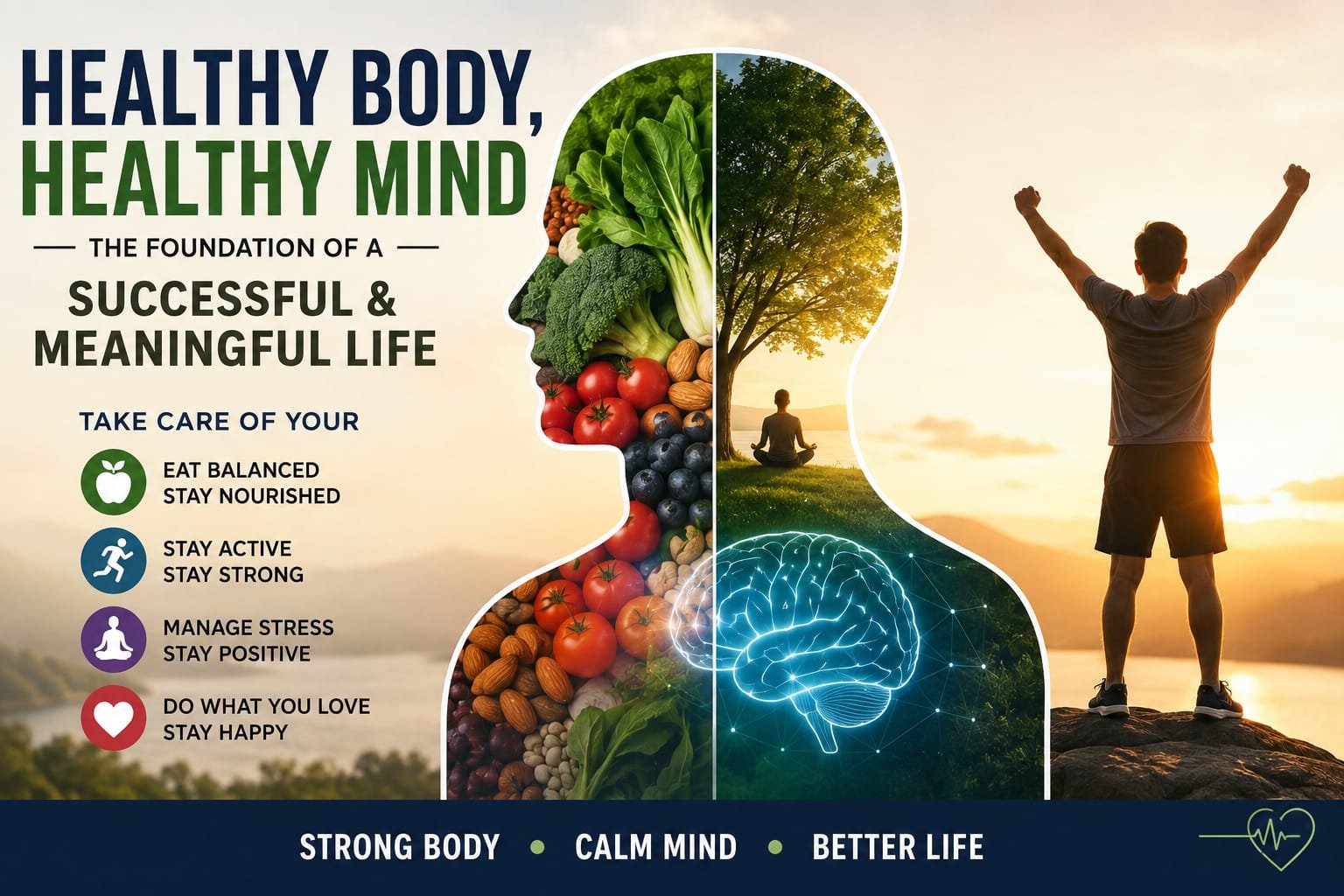
1. Nourish Your Body with a Balanced Diet
Food is more than fuel. It influences our energy, focus, mood, and overall health.
A balanced diet that includes fruits, vegetables, whole grains, legumes, proteins, and other nutritious foods can support both physical and mental well-being.
Healthy eating does not require perfection. It requires consistency.
The goal is not to eliminate every favorite food but to create sustainable habits based on balance, moderation, and awareness.
Because long-term health depends not only on what we eat, but also on when we eat, how much we eat, and how consistently we maintain healthy habits.
2. Move Your Body Regularly
The human body is designed for movement.
Regular physical activity can help improve fitness, increase energy, reduce stress, and enhance overall well-being.
Exercise does not have to mean spending hours in a gym. Walking, running, cycling, swimming, yoga, dancing, or any enjoyable physical activity can provide meaningful benefits.
The most effective exercise routine is often the one that becomes a regular part of everyday life.
Consistency matters more than intensity.
3. Make Time for What Brings You Joy
Life should not become a never-ending cycle of responsibilities.
Many people schedule meetings, deadlines, and obligations but rarely schedule time for themselves.
Listening to music, reading books, gardening, painting, watching films, playing an instrument, or pursuing any personal interest can provide emotional relief and mental renewal.
A life filled only with responsibilities may appear productive.
But productivity alone does not create fulfillment.
True well-being requires moments of joy, creativity, curiosity, and personal expression.
Making time for the things you love is not a luxury—it is an investment in your mental health.
Which Comes First: A Healthy Body or a Healthy Mind?
People often say:
«”A healthy mind lives in a healthy body.”»
There is certainly wisdom in this statement because the body and mind constantly influence one another.
However, I believe there is another perspective worth considering.
When the mind becomes healthy, balanced, and optimistic, people often become more motivated to care for their physical health. They exercise more consistently, make healthier choices, sleep better, and develop greater self-discipline.
Conversely, when someone is overwhelmed by stress, hopelessness, or emotional exhaustion, maintaining healthy habits can become far more difficult—even when they know those habits are important.
So perhaps the question is not:
Which should come first—the body or the mind?
Perhaps the better question is:
Can we strengthen both together?
The answer is yes.
Sometimes physical health supports mental well-being.
Sometimes mental resilience inspires better physical health.
Neither exists in complete isolation.
The healthiest life is often built when both are nurtured side by side.
The Relationship Between Health and Success
Society often measures success through income, status, possessions, achievements, and recognition.
Yet success becomes difficult to enjoy when health begins to deteriorate.
What value is professional achievement if stress prevents us from enjoying it?
What value is financial success if poor health prevents us from living fully?
Perhaps true success is not simply the ability to achieve more.
Perhaps it is the ability to enjoy what we have achieved.
A healthy body gives us the energy to pursue our goals.
A healthy mind gives us the wisdom to appreciate them.
For this reason, health should not be viewed as something separate from success.
Health is the foundation upon which lasting success is built.
Conclusion
Health is not a destination that we reach once and keep forever.
It is an ongoing process that requires attention, awareness, and daily effort.
We must learn to care for our bodies, understand our minds, acknowledge our emotions, and create space for the activities that bring meaning and happiness into our lives.
Let us not sacrifice our well-being in the pursuit of success.
Because life is not only about earning more, achieving more, or becoming more successful.
It is also about experiencing life with energy, peace, gratitude, and purpose.
«”A healthy body and a healthy mind are the true foundations of a successful, balanced, happy, and meaningful life.”»
A Small Request
If you found this article valuable, consider sharing it with your friends and family.
A simple message shared at the right time can encourage someone to take better care of their health, pay attention to their mental well-being, and make a positive change in their life.
Sometimes, changing a life does not require a grand speech.
Sometimes, it begins with a single meaningful reminder.
Disclaimer: This article is intended for general awareness and educational purposes only. It should not be considered medical or mental health advice. For specific health concerns, please consult a qualified healthcare professional.
Leave a Reply