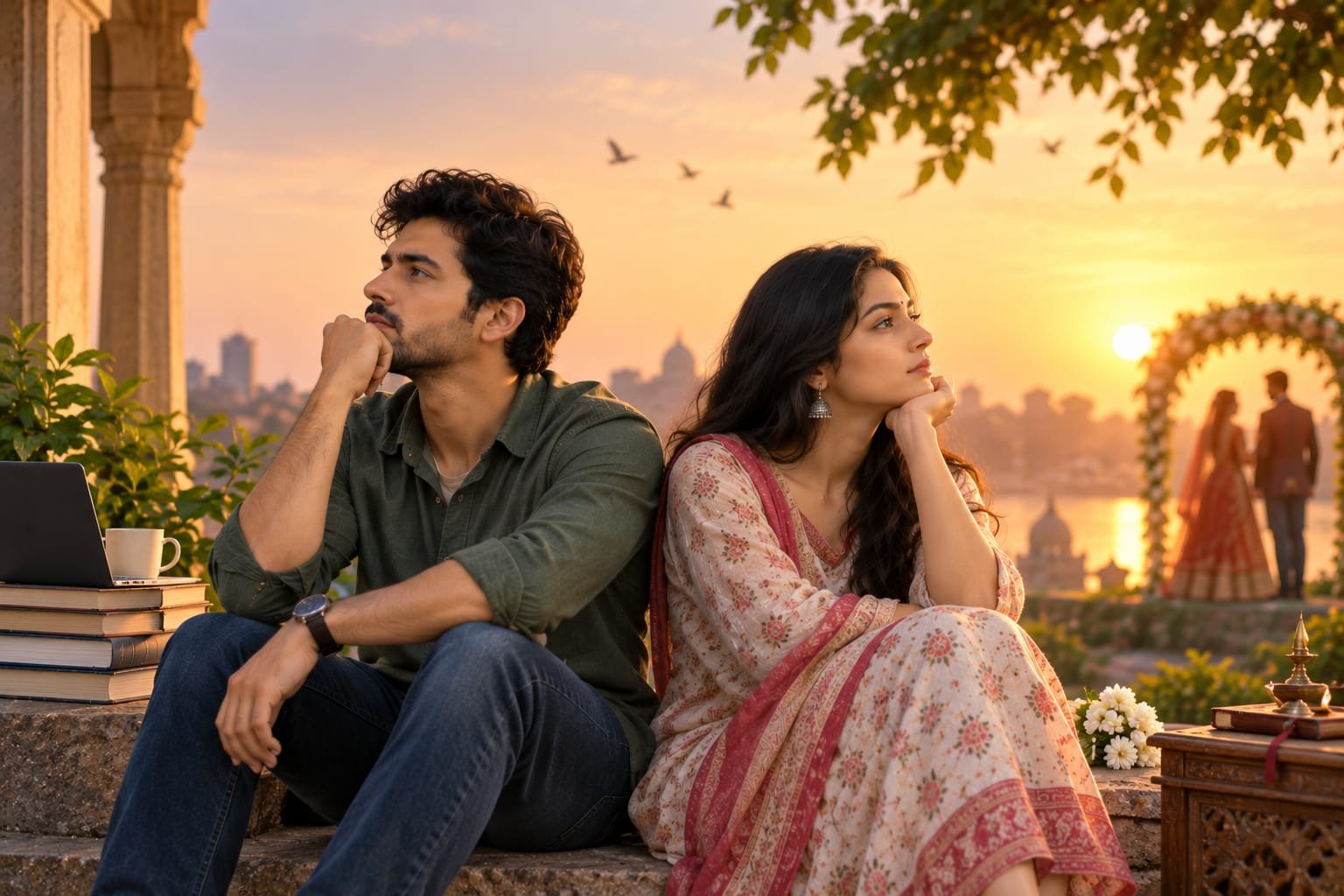
• क्या लोगों ने विवाह को छोड़ दिया है?

    क्या लोगों ने विवाह को छोड़ दिया है?

    Read in English: Have People Abandoned Marriage?

    ← पिछला भाग पढ़ें: विवाह समाप्त नहीं हो रहा — विवाह के प्रति बदलती सोच के पीछे छिपी शांत क्रांति

    “लोगों ने प्रेम को नहीं छोड़ा है। शायद उन्होंने जल्दबाज़ी में किए जाने वाले विवाहों से दूरी बनानी शुरू कर दी है।”

    जब हम दुनिया भर में विवाह के बदलते स्वरूप और रुझानों को देखते हैं, तो स्वाभाविक रूप से एक प्रश्न सामने आता है—क्या लोगों ने विवाह को छोड़ना शुरू कर दिया है?

    पहली नज़र में ऐसा लग सकता है।

    कई देशों में लोग पिछली पीढ़ियों की तुलना में देर से विवाह कर रहे हैं। 2025 के U.S. Census Bureau के आँकड़ों के अनुसार, संयुक्त राज्य अमेरिका में पहली शादी की अनुमानित औसत आयु पुरुषों के लिए 30.8 वर्ष और महिलाओं के लिए 28.4 वर्ष थी। 1975 में यही आँकड़े क्रमशः 23.5 वर्ष और 21.1 वर्ष थे।

    यह बदलाव निश्चित रूप से महत्वपूर्ण है।

    हालाँकि, यहाँ एक महत्वपूर्ण अंतर को समझना आवश्यक है—देर से विवाह करना और विवाह को पूरी तरह अस्वीकार कर देना एक ही बात नहीं है।

    यदि कोई व्यक्ति 32 वर्ष की आयु में विवाह करता है, तो इसका अर्थ यह आवश्यक नहीं कि उसने विवाह को अस्वीकार कर दिया है। हो सकता है कि उसने अपनी शिक्षा पूरी करने, करियर बनाने, आर्थिक स्थिरता प्राप्त करने या सही जीवनसाथी मिलने तक प्रतीक्षा करने का निर्णय लिया हो।

    Pew Research Center के संयुक्त राज्य अमेरिका से संबंधित हालिया आँकड़े इस विषय को और स्पष्ट करते हैं।

    2025 के एक सर्वेक्षण में, 18–49 वर्ष की आयु के उन गैर-LGBTQ अमेरिकी वयस्कों में, जिनका कभी विवाह नहीं हुआ था, 63% ने कहा कि वे भविष्य में किसी समय विवाह करना चाहते हैं। वहीं 12% ने कहा कि वे विवाह नहीं करना चाहते, जबकि 25% इस बारे में निश्चित नहीं थे।

    ये आँकड़े यह संकेत नहीं देते कि अधिकांश अविवाहित लोग विवाह के विरोध में हैं।

    कई लोग केवल अभी विवाह के लिए तैयार नहीं हैं।

    यहीं पर सामाजिक धारणाएँ अक्सर वास्तविकता को बहुत सरल बना देती हैं।

    हम किसी व्यक्ति को देखकर कह सकते हैं—

    “उसकी शादी नहीं हुई है।”

    लेकिन हम यह नहीं जानते कि वह व्यक्ति वास्तव में क्या सोच रहा है या किन परिस्थितियों से गुजर रहा है।

    शायद वह सही जीवनसाथी की तलाश में हो।

    शायद उसने अपने माता-पिता के असफल विवाह को देखकर विवाह के प्रति अधिक सावधानी बरतना शुरू कर दिया हो।

    शायद वह अपने करियर को कुछ और वर्षों तक प्राथमिकता देना चाहता हो।

    शायद वह आर्थिक रूप से तैयार न हो।

    शायद उसे गलत व्यक्ति चुन लेने की चिंता हो।

    या फिर…

    वह वास्तव में विवाह नहीं करना चाहता हो।

    इन सभी परिस्थितियों को केवल एक ही वाक्य में समेट देना उचित नहीं होगा—

    “विवाह से बचना।”

    अतीत में विवाह को अक्सर जीवन का एक स्वाभाविक और लगभग अनिवार्य पड़ाव माना जाता था।

    एक निश्चित उम्र…

    फिर नौकरी…

    फिर विवाह…

    फिर बच्चे…

    और अंततः एक परिवार।

    काफी हद तक समाज ने जीवन का यह क्रम पहले से निर्धारित कर रखा था।

    लेकिन आधुनिक समाज में यह क्रम अधिक लचीला हो गया है।

    अब लोग पहले उच्च शिक्षा प्राप्त कर सकते हैं।

    फिर अपना करियर बना सकते हैं।

    फिर यात्रा कर सकते हैं।

    फिर आर्थिक स्वतंत्रता प्राप्त कर सकते हैं।

    और उसके बाद विवाह के बारे में विचार कर सकते हैं।

    कुछ लोग विवाह किए बिना भी अपने जीवन को व्यवस्थित करने में सक्षम हैं।

    इसका परिणाम यह है कि कई लोगों के लिए विवाह अब जीवन का कोई अनिवार्य पड़ाव नहीं रहा, बल्कि कई विकल्पों में से एक विकल्प बन गया है।

    हालाँकि, किसी चीज़ का एक विकल्प बन जाना यह नहीं दर्शाता कि उसका महत्व समाप्त हो गया है।

    यही अंतर समझना आवश्यक है।

    यहाँ भी हमें स्थिति को ठीक से समझने की आवश्यकता है।

    अविवाहित होने का अर्थ यह आवश्यक नहीं कि कोई व्यक्ति अकेला है।

    कोई व्यक्ति अविवाहित होते हुए भी एक प्रेमपूर्ण संबंध में हो सकता है, उसके करीबी मित्र हो सकते हैं, परिवार का सहयोग हो सकता है और उसके मजबूत सामाजिक संबंध हो सकते हैं।

    इसके विपरीत, एक विवाहित व्यक्ति भी भावनात्मक अकेलेपन का अनुभव कर सकता है।

    Pew Research Center के 2025 के एक विश्लेषण के अनुसार, 2023 में संयुक्त राज्य अमेरिका के 42% वयस्क किसी जीवनसाथी या रोमांटिक पार्टनर के साथ नहीं रह रहे थे, जबकि 2019 में यह आँकड़ा 44% था। इसी अवधि में विवाहित वयस्कों का अनुपात 50% से बढ़कर 51% हुआ, जबकि अविवाहित पार्टनर के साथ रहने वाले लोगों का अनुपात 6% से बढ़कर 7% हो गया।

    इसलिए व्यापक तस्वीर केवल इतनी नहीं है कि “लोग विवाह को छोड़ रहे हैं।”

    बल्कि यह है कि लोग अपने रिश्तों और निजी जीवन को पहले की तुलना में अधिक विविध तरीकों से व्यवस्थित कर रहे हैं।

    शायद नहीं।

    शायद अधिक महत्वपूर्ण बदलाव यह है—

    लोग अब केवल विवाहित होने के लिए विवाह नहीं करना चाहते।

    वे सही व्यक्ति से विवाह करना चाहते हैं।

    यदि उन्हें वह व्यक्ति नहीं मिलता, तो कुछ लोग प्रतीक्षा करना पसंद करते हैं।

    कुछ लोग अकेले रहना चुनते हैं।

    कुछ लोग विवाह के बजाय प्रतिबद्ध रिश्तों के अन्य रूपों को अपनाते हैं।

    और कुछ लोग अंततः विवाह कर लेते हैं।

    इन सभी निर्णयों को एक ही दृष्टिकोण से देखना उचित नहीं होगा।

    विवाह केवल उम्र का प्रश्न नहीं है।

    यह व्यक्ति, उसकी परिस्थितियों, संस्कृति, आर्थिक स्थिति, व्यक्तिगत मूल्यों और जीवन की प्राथमिकताओं से प्रभावित होता है।

    इसलिए शायद हमें यह पूछना बंद कर देना चाहिए—

    “लोग विवाह क्यों नहीं कर रहे हैं?”

    और इसके बजाय यह पूछना शुरू करना चाहिए—

    “लोग पहले की तुलना में विवाह के बारे में अधिक सोच-समझकर निर्णय क्यों ले रहे हैं?”

    इसका उत्तर शायद सीधा है।

    विवाह केवल एक दिन का उत्सव नहीं है।

    यह किसी दूसरे व्यक्ति के साथ जीवन के हजारों सामान्य दिनों को साझा करने का निर्णय है।

    जब कोई निर्णय इतना महत्वपूर्ण हो…

    तो उसे लेने में समय लगना आवश्यक रूप से कोई गलती नहीं है।

    कभी-कभी…

    देर से लिया गया सही निर्णय, जल्दबाज़ी में लिए गए गलत निर्णय से कहीं बेहतर होता है।

    To Be Continued…

    यह कहानी अभी समाप्त नहीं हुई है।

    विवाह के प्रति बदलते दृष्टिकोण के अभी कई और पहलू हैं, जिन्हें समझना बाकी है…

    यह लेख विवाह के पक्ष या विपक्ष में कोई विचार प्रस्तुत करने के बजाय, विवाह के प्रति बदलते सामाजिक दृष्टिकोण को समझने का प्रयास करता है। हमारा उद्देश्य विभिन्न दृष्टिकोणों, प्रासंगिक शोध और वास्तविक सामाजिक परिस्थितियों को सामने रखना है, ताकि पाठक स्वयं अपना निष्कर्ष निकाल सकें।

    आप क्या सोचते हैं?

    क्या देर से विवाह करना बदलती सोच का संकेत है या बदलती प्राथमिकताओं का?

    क्या आज के लोग पिछली पीढ़ियों की तुलना में विवाह के बारे में अधिक सोच-समझकर निर्णय ले रहे हैं?

    अपनी राय कमेंट में साझा करें।

    यह लेख किसी को विवाह करने या विवाह न करने की सलाह नहीं देता। इसमें प्रस्तुत विचार और विश्लेषण केवल सामाजिक बदलाव, उपलब्ध शोध और विभिन्न दृष्टिकोणों को समझने के उद्देश्य से दिए गए हैं। लेख में उल्लिखित आँकड़े संबंधित स्रोतों पर आधारित हैं और समय के साथ बदल सकते हैं। विवाह से जुड़े व्यक्तिगत निर्णय व्यक्ति की परिस्थितियों, प्राथमिकताओं और आपसी समझ पर निर्भर करते हैं।

    इस लेख में प्रस्तुत आँकड़े U.S. Census Bureau और Pew Research Center द्वारा किए गए प्रासंगिक शोध, सर्वेक्षणों और विश्लेषणों पर आधारित हैं। जहाँ उपयुक्त है, वहाँ मूल स्रोतों के संदर्भ प्रदान किए गए हैं। 

  • Have People Abandoned Marriage?

    Have People Abandoned Marriage?

    हिंदी में पढ़े : क्या लोगों ने विवाह को छोड़ दिया है?

    ← Read the previous part: Marriage Is Not Ending — The Quiet Revolution Behind Changing Attitudes Toward Marriage

    “People have not abandoned love. Perhaps they have begun moving away from marriages entered into hastily.”

    When we examine changing patterns of marriage around the world, one question naturally arises—

    Have people begun abandoning marriage?

    At first glance, it may appear so.

    In many countries, people are marrying later than previous generations. According to 2025 U.S. Census Bureau data, the estimated median age at first marriage in the United States was 30.8 years for men and 28.4 years for women. In 1975, those figures were 23.5 and 21.1 years, respectively.

    This change is certainly significant.

    However, it is important to recognize one crucial distinction—

    Marrying later and rejecting marriage altogether are not the same thing.

    If someone marries at the age of 32, that does not necessarily mean they have rejected marriage. They may have chosen to complete their education, establish a career, achieve financial stability, or wait until they found the right life partner.

    Recent Pew Research Center data from the United States provides further clarity.

    In a 2025 survey, 63% of non-LGBTQ American adults aged 18–49 who had never married said they wanted to marry at some point in the future. Twelve percent said they did not want to marry, while 25% were uncertain.

    These findings do not suggest that most unmarried people oppose marriage.

    Many people are simply not yet ready for marriage.

    This is where social perceptions often oversimplify reality.

    We may look at someone and say—

    “They are not married.”

    But we do not know what they are thinking or experiencing.

    Perhaps they are searching for the right partner.

    Perhaps they became cautious after witnessing their parents’ failed marriage.

    Perhaps they want to devote several more years to their career.

    Perhaps they are not financially prepared.

    Perhaps they are concerned about choosing the wrong person.

    Or perhaps…

    They genuinely do not want to marry.

    These circumstances cannot all be reduced to the single phrase—

    “avoiding marriage.”

    What Has Changed in People’s Attitudes Toward Marriage?

    In the past, marriage was often regarded as a natural and almost inevitable stage of life.

    A certain age…

    Then a job…

    Then marriage…

    Then children…

    And eventually, a family.

    To a considerable extent, society had already established this sequence of life.

    In modern society, however, this sequence has become more flexible.

    People may now pursue higher education first.

    Then establish a career.

    Then travel.

    Then achieve financial independence.

    And only afterward consider marriage.

    Some people are able to structure their lives without marrying.

    As a result, marriage is no longer an unavoidable stage of life for many people, but rather one option among several.

    However, becoming an option does not mean losing its importance.

    This distinction is essential.

    Do People Really Want to Live Alone?

    Here, too, we need to be precise.

    Being unmarried does not necessarily mean being alone.

    A person may be unmarried while still having a loving relationship, close friends, family support, and strong social connections.

    Conversely, a married person may still experience emotional loneliness.

    According to a 2025 analysis by the Pew Research Center, 42% of adults in the United States were not living with a spouse or romantic partner in 2023, compared with 44% in 2019. During the same period, the share of married adults increased from 50% to 51%, while the share of people living with an unmarried partner rose from 6% to 7%.

    The broader picture, therefore, is not simply one of “people abandoning marriage.”

    Rather, people are organizing their relationships in increasingly diverse ways.

    So, Have People Abandoned Marriage?

    Perhaps not.

    Perhaps the more significant change is this—

    People no longer want to marry simply for the sake of being married.
    They want to marry the right person.

    If they do not find that person, some prefer to wait.

    Some choose to live alone.

    Some pursue other forms of committed relationships instead of marriage.

    Others eventually marry.

    It would be inappropriate to view all these decisions through the same lens.

    Marriage is not merely a question of age.

    It is influenced by the individual, their circumstances, culture, financial situation, personal values, and priorities in life.

    Perhaps, therefore, we should stop asking—

    “Why are people not getting married?”

    And begin asking—

    “Why are people making more deliberate decisions about marriage than before?”

    The answer may be straightforward.

    Marriage is not merely a one-day celebration.

    It is a decision to share thousands of ordinary days with another person.

    When a decision carries such significance…

    taking time to make it is not necessarily a mistake.

    Sometimes…

    A sound decision made later is far better than a poor decision made in haste.

    To Be Continued…

    This story is not over yet.

    There are still more dimensions to explore in the changing attitudes toward marriage…

    Read the third part of this series soon.

    Rather than advocating for or against marriage, this article seeks to understand changing social attitudes. Our aim is to present different perspectives, relevant research, and real social circumstances so that readers can form their own conclusions.

    What Do You Think?

    Is marrying later a sign of changing attitudes or changing priorities?

    Are people today approaching marriage more thoughtfully than previous generations?

    Share your opinion in the comments.

    This article does not advise anyone to marry or not to marry. The ideas and analysis presented here are intended solely to support an understanding of social change, available research, and differing perspectives. The statistics cited in the article are based on relevant sources and may change over time. Personal decisions regarding marriage depend on an individual’s circumstances, priorities, and mutual understanding.

    The statistics presented in this article are based on relevant research, surveys, and analyses by the U.S. Census Bureau and the Pew Research Center. References to the original sources have been provided where appropriate. 

  • Marriage Isn’t Dying: The Silent Revolution Behind Why People Are Rethinking Marriage

    Marriage Isn’t Dying: The Silent Revolution Behind Why People Are Rethinking Marriage

    हिंदी में पढ़ें : विवाह समाप्त नहीं हो रहा है: विवाह के बारे में बदलती सोच के पीछे चल रही शांत क्रांति

    “How old are you now?”

    “You still haven’t gotten married?”

    “Didn’t you find anyone you liked?”

    …?

    Perhaps, after crossing the age of 28, 30, or 35, you too have heard one of these questions.

    Someone may have asked jokingly.

    Someone out of concern.

    And someone perhaps asked as if the most important task of life was still incomplete.

    But there is one question that is rarely discussed—

    Should every person get married simply because society thinks it is time for them to get married?

    This is where the story changes.

    Today, people in many parts of the world are getting married later than they did in the past. In the United States, too, young people are reaching important milestones related to marriage and family later than previous generations. According to Pew Research Center, in 2023, 29% of Americans aged 25–29 were married, compared with 50% in 1993. Among those aged 30–34, the share also fell from 63% in 1993 to 51% in 2023.

    But does this mean that people have rejected marriage?

    Not necessarily.

    In a 2025 Pew Research Center survey of U.S. non-LGBTQ adults ages 18–49 who had never been married, 63% said they would like to get married someday. Meanwhile, 12% said they did not want to get married, while 25% were unsure.

    So, what is the real story?

    Perhaps people have not moved away from love.

    Perhaps they have not moved away from family either.

    Perhaps they have simply started saying—

    “I will not enter a lifelong relationship simply because I have reached a certain age.”

    Today, many people want to establish their careers first.

    Some want to become financially stable.

    Some are waiting to find the right partner.

    Some become more cautious because of experiences from previous relationships.

    And some people also accept that they can live a fulfilling life without marriage.

    Therefore, we need to understand one important distinction—

    Getting married later and rejecting marriage are not the same thing.

    And perhaps that is the most interesting part of this entire story.

    Because the question should not be—

    “Why are people not getting married?”

    Perhaps the better question is—

    “Why are people thinking so much before getting married now?”

    Is it fear?

    Is it selfishness?

    Is it a changing social structure?

    Or perhaps…

    Is it an attempt to choose a life partner with greater awareness than before?

    In this article, we will not try to prove one side right.

    We will not say that everyone should get married.

    Nor will we say that marriage is unnecessary.

    We will try to understand changing attitudes toward marriage in different societies, including India and the United States, along with marriage age, family, independence, economic circumstances, and the psychology of relationships.

    We will also explore how the thinking of women and men has changed, and how different philosophical perspectives—including those of Buddha, Osho, and the Bhagavad Gita—look at marriage.

    Because perhaps…

    Marriage isn’t dying.

    People are simply asking better questions before saying yes.

    And perhaps this is the quietest…

    but deepest revolution in modern society.

    But what is the real reason behind this changing mindset? Is it simply a personal decision, or is it part of a deeper maze of changing society, economics, and priorities around us?


    Author’s Note


    This article does not attempt to take a position for or against marriage. It is an effort to understand changing social attitudes by bringing together different perspectives, available research, and real-life social circumstances. Our aim is to give readers an opportunity to think for themselves.


    What’s Your Take?


    Do you think getting married later is a sign of changing mindsets or changing priorities? Are people today choosing marriage with more thought and awareness than before? Share your views in the comments.


    Disclaimer


    This article does not advise anyone to marry or not to marry. The views and analysis presented here are intended only to help understand social changes, available research, and different perspectives. The data and statistics mentioned in the article are based on relevant sources and may change over time. Personal decisions related to marriage depend on individual circumstances, priorities, and mutual understanding.


    Sources


    The statistics presented in this article are based on relevant research and surveys published by the Pew Research Center. Original sources have been referenced wherever necessary. 

  • विवाह समाप्त नहीं हो रहा है : विवाह के बारे में बदलती सोच के पीछे चल रही शांत क्रांति

    विवाह समाप्त नहीं हो रहा है : विवाह के बारे में बदलती सोच के पीछे चल रही शांत क्रांति

    Read in English: Marriage Isn’t Dying: The Silent Revolution Behind Why People Are Rethinking Marriage

    “तुम्हारी उम्र कितनी हो गई है?”

    “अभी तक शादी नहीं की?”

    “कोई पसंद नहीं आई?”

    …

    शायद 28, 30 या 35 की उम्र पार करते हुए आपने भी इनमें से कोई सवाल सुना हो।

    किसी ने मज़ाक में पूछा होगा।

    किसी ने चिंता में।

    और किसी ने शायद ऐसे पूछा होगा जैसे जीवन का सबसे महत्वपूर्ण काम अब तक अधूरा पड़ा हो।

    लेकिन एक बात पर शायद ही कभी चर्चा होती है—

    क्या हर व्यक्ति को केवल इसलिए शादी कर लेनी चाहिए क्योंकि समाज को लगता है कि अब उसकी शादी हो जानी चाहिए?

    यहीं से कहानी बदलती है।

    आज दुनिया के कई हिस्सों में लोग पहले की तुलना में देर से शादी कर रहे हैं। अमेरिका में भी युवा लोग पिछली पीढ़ियों की तुलना में बाद में विवाह और परिवार से जुड़े महत्वपूर्ण पड़ाव हासिल कर रहे हैं। प्यू रिसर्च सेंटर के अनुसार, 2023 में अमेरिका में 25–29 वर्ष की आयु के 29% लोग विवाहित थे, जबकि 1993 में यह अनुपात 50% था। 30–34 वर्ष की आयु में भी यह अनुपात 1993 के 63% से घटकर 2023 में 51% रह गया।

    लेकिन क्या इसका मतलब यह है कि लोगों ने विवाह को ठुकरा दिया है?

    जरूरी नहीं।

    2025 में प्यू रिसर्च सेंटर के एक अमेरिकी सर्वेक्षण में 18–49 वर्ष के ऐसे गैर-एलजीबीटीक्यू अमेरिकी वयस्क, जिन्होंने कभी विवाह नहीं किया था, उनमें 63% ने कहा कि वे भविष्य में कभी न कभी शादी करना चाहते हैं। वहीं 12% ने कहा कि वे शादी नहीं करना चाहते, जबकि 25% इस बारे में निश्चित नहीं थे।

    शायद इंसान प्रेम से दूर नहीं हुआ।

    शायद वह परिवार से भी दूर नहीं हुआ।

    शायद वह केवल यह कहने लगा है—

    “मैं जीवनभर का रिश्ता केवल इसलिए नहीं बनाऊँगा क्योंकि अब मेरी उम्र हो गई है।”

    आज बहुत-से लोग पहले अपने करियर को व्यवस्थित करना चाहते हैं।

    कुछ आर्थिक रूप से स्थिर होना चाहते हैं।

    कुछ सही साथी मिलने का इंतज़ार करते हैं।

    कुछ पिछले रिश्तों के अनुभव से सावधान हो जाते हैं।

    और कुछ लोग यह भी स्वीकार करते हैं कि वे विवाह के बिना भी संतुष्ट जीवन जी सकते हैं।

    इसलिए हमें एक महत्वपूर्ण अंतर समझना होगा—

    देर से शादी करना और शादी को अस्वीकार करना एक ही बात नहीं है।

    और शायद यही इस पूरी कहानी का सबसे दिलचस्प हिस्सा है।

    क्योंकि सवाल यह नहीं होना चाहिए—

    “लोग शादी क्यों नहीं कर रहे?”

    शायद सही सवाल यह है—

    “लोग अब शादी करने से पहले इतना सोच क्यों रहे हैं?”

    क्या यह डर है?

    क्या यह स्वार्थ है?

    क्या यह बदलती सामाजिक व्यवस्था है?

    या फिर…

    क्या यह पहले से अधिक जागरूक होकर जीवनसाथी चुनने की कोशिश है?

    इस लेख में हम किसी एक पक्ष को सही साबित करने की कोशिश नहीं करेंगे।

    न हम यह कहेंगे कि हर व्यक्ति को शादी करनी चाहिए।

    न हम यह कहेंगे कि शादी की कोई जरूरत नहीं है।

    हम भारत और अमेरिका सहित अलग-अलग समाजों में बदलती सोच, विवाह की उम्र, परिवार, स्वतंत्रता, आर्थिक परिस्थितियों और रिश्तों के मनोविज्ञान को समझने की कोशिश करेंगे।

    हम यह भी देखेंगे कि महिलाओं और पुरुषों की सोच में क्या बदलाव आया है, और बुद्ध, ओशो तथा भगवद्गीता जैसे अलग-अलग दार्शनिक दृष्टिकोण विवाह को किस तरह देखते हैं।

    क्योंकि शायद…

    विवाह समाप्त नहीं हो रहा है।

    लोग हाँ कहने से पहले बेहतर सवाल पूछ रहे हैं।

    और शायद यही आधुनिक समाज की सबसे शांत…

    लेकिन सबसे गहरी क्रांति है।

    लेकिन इस सोच के पीछे की असली वजह क्या है? क्या यह सिर्फ एक फैसला है, या हमारे आस-पास बदलते समाज, अर्थशास्त्र और प्राथमिकताओं का एक गहरा चक्रव्यूह?

    लेखक की टिप्पणी

    यह लेख विवाह के पक्ष या विपक्ष में कोई निर्णय देने के बजाय बदलती सामाजिक सोच को समझने का एक प्रयास है। हमारा उद्देश्य अलग-अलग दृष्टिकोणों, उपलब्ध शोध और वास्तविक सामाजिक परिस्थितियों को सामने रखकर पाठक को स्वयं सोचने का अवसर देना है।

    आपकी राय क्या है?

    क्या देर से विवाह करना बदलती सोच का संकेत है या बदलती प्राथमिकताओं का? क्या आज के लोग विवाह को पहले की तुलना में अधिक सोच-समझकर चुन रहे हैं? अपनी राय टिप्पणी में साझा करें।

    अस्वीकरण

    यह लेख किसी व्यक्ति को विवाह करने या न करने की सलाह नहीं देता। इसमें प्रस्तुत विचार और विश्लेषण केवल सामाजिक बदलाव, उपलब्ध शोध और विभिन्न दृष्टिकोणों को समझने के उद्देश्य से हैं। लेख में दिए गए आँकड़े संबंधित स्रोतों पर आधारित हैं और समय के साथ इनमें बदलाव हो सकता है। विवाह से जुड़े व्यक्तिगत निर्णय व्यक्ति की परिस्थितियों, प्राथमिकताओं और आपसी समझ पर निर्भर करते हैं।

    स्रोत

    लेख में प्रस्तुत आँकड़े प्यू रिसर्च सेंटर के संबंधित शोध और सर्वेक्षणों पर आधारित हैं। जहाँ आवश्यक हो, मूल स्रोतों का संदर्भ दिया गया है। 

  • अति-चिंतन (Overthinking) का नुकसान:जब सोच ही बन जाये मन का बोझ

    क्या आपने कभी एक ही बातचीत को अपने मन में दर्जनों बार दोहराया है?

    क्या आपने अतीत की किसी गलती या भविष्य की अनिश्चितता के बारे में सोचते-सोचते कई रातें बिना सोए गुज़ारी हैं?

    अगर आपका जवाब हाँ है, तो आपने अति-चिंतन (Overthinking) का अनुभव किया है।

    आज की तेज़ रफ्तार दुनिया में अति-चिंतन (Overthinking) एक आम मानसिक संघर्ष बन गया है। सोचना हमें समस्याओं को हल करने और बेहतर निर्णय लेने में मदद करता है, लेकिन जब सोच जरूरत से ज्यादा बढ़ जाती है, तो यही सोच हमें चिंता, तनाव और आत्म-संदेह के चक्र में फँसा सकती है।

    आइए समझते हैं कि अति-चिंतन (Overthinking) क्या है, यह क्यों होता है, इसके क्या नुकसान हैं और इससे बाहर कैसे निकला जा सकता है।

    अति-चिंतन (Overthinking) क्या है?

    अति-चिंतन (Overthinking) का अर्थ है किसी परिस्थिति, समस्या, बातचीत या भविष्य की संभावनाओं का बार-बार विश्लेषण करते रहना, लेकिन किसी सार्थक निष्कर्ष तक न पहुँच पाना।

    जो व्यक्ति अति-चिंतन (Overthinking) करता है, वह अक्सर विचारों के अंतहीन चक्र में फँस जाता है। वह किसी निर्णय पर आगे बढ़ने के बजाय अलग-अलग संभावनाओं की कल्पना करता रहता है, अतीत की घटनाओं को बार-बार याद करता है और भविष्य में क्या होगा, इसकी चिंता करता रहता है।

    स्वस्थ सोच हमें आगे बढ़ने में मदद करती है।

    अति-चिंतन (Overthinking) हमें वहीं रोककर रखता है।

    लोग अति-चिंतन (Overthinking) क्यों करते हैं?

    1. अवास्तविक अपेक्षाएँ

    कई लोग खुद से और दूसरों से बहुत अधिक अपेक्षाएँ रखने लगते हैं। जब वास्तविकता उनकी उम्मीदों के अनुसार नहीं होती, तो मन निराशा के हर संभावित कारण का विश्लेषण करना शुरू कर देता है।

    2. रिश्तों को लेकर असुरक्षा

    रिश्ते अति-चिंतन (Overthinking) के सबसे बड़े कारणों में से एक हो सकते हैं।

    “क्या वह व्यक्ति वास्तव में मेरी परवाह करता है?”

    “उसने अभी तक मेरे संदेश का जवाब क्यों नहीं दिया?”

    ऐसे सवाल मन में लगातार चलते रह सकते हैं और धीरे-धीरे मानसिक तनाव बढ़ा सकते हैं।

    3. अहंकार और असफलता का डर

    लोग अक्सर गलती करने या दूसरों के सामने अपूर्ण दिखाई देने से डरते हैं। यही डर उन्हें किसी निर्णय को लेने से पहले हर छोटी-बड़ी संभावना का जरूरत से ज्यादा विश्लेषण करने के लिए मजबूर कर सकता है।

    4. दूसरों से अपनी तुलना करना

    सोशल मीडिया ने तुलना करना पहले से कहीं आसान बना दिया है।

    हम अपने जीवन, करियर, रिश्तों और उपलब्धियों की तुलना दूसरों के दिखने वाले जीवन से करने लगते हैं। यह लगातार तुलना अति-चिंतन (Overthinking) को बढ़ा सकती है।

    5. वर्तमान क्षण से दूरी

    जब हमारा मन वर्तमान में स्थिर नहीं होता, तो वह स्वाभाविक रूप से अतीत के पछतावे और भविष्य की चिंताओं के बीच भटकने लगता है।

    यहीं से मानसिक शोर बढ़ना शुरू होता है।

    अति-चिंतन (Overthinking) के नुकसान

    😴

     नींद की गुणवत्ता में कमी

    अति-चिंतन (Overthinking) अक्सर रात में और अधिक बढ़ जाता है। दिनभर के विचार और चिंताएँ मन को शांत नहीं होने देतीं, जिससे व्यक्ति को सोने में कठिनाई हो सकती है।

    😟

     चिंता और मानसिक तनाव

    लगातार किसी बात का विश्लेषण करते रहना चिंता और मानसिक थकान को बढ़ा सकता है।

    📉

     उत्पादकता में कमी

    अति-चिंतन (Overthinking) करने वाला व्यक्ति कई बार काम करने से ज्यादा उसके बारे में सोचने में समय लगा देता है। इससे निर्णय लेने में देरी होती है और अवसर भी हाथ से निकल सकते हैं।

    💔

     रिश्तों में समस्याएँ

    अति-चिंतन (Overthinking) के कारण व्यक्ति ऐसी बातों के अर्थ निकाल सकता है जो वास्तव में कही या की ही नहीं गईं। गलतफहमियाँ और धारणाएँ रिश्तों को नुकसान पहुँचा सकती हैं।

    🕊️

     आंतरिक शांति का खोना

    जिस मन में विचार लगातार चलते रहते हैं, उसके लिए वास्तविक शांति और वर्तमान क्षण की खुशी को महसूस करना कठिन हो सकता है।

    बुद्ध ने अति-चिंतन (Overthinking) के बारे में क्या सिखाया?

    बुद्ध की शिक्षाएँ हमें बार-बार इस बात की ओर ले जाती हैं कि अतीत से चिपके रहना और भविष्य की चिंता करना वर्तमान क्षण की शांति को प्रभावित कर सकता है।

    बौद्ध दर्शन में Mindfulness यानी सजगता को विशेष महत्व दिया गया है।

    जब हम वर्तमान क्षण के प्रति पूरी तरह जागरूक होते हैं, तो अनावश्यक विचारों की पकड़ धीरे-धीरे कमजोर होने लगती है।

    हम जितना अधिक वर्तमान में जीना सीखते हैं, उतना ही कम हमारा मन अतीत के पछतावे और भविष्य की आशंकाओं में उलझता है।

    वर्तमान में होना केवल एक विचार नहीं, बल्कि मन को देखने का एक अभ्यास है।

    ओशो ने अति-चिंतन (Overthinking) के बारे में क्या कहा?

    ओशो ने विचारों को पूरी तरह गलत नहीं माना। समस्या तब पैदा होती है जब इंसान विचारों का उपयोग करने के बजाय स्वयं अपने विचारों में फँस जाता है।

    उनकी शिक्षाओं में ध्यान, मौन और साक्षी भाव (Witnessing) को विशेष महत्व दिया गया है।

    साक्षी भाव का अर्थ है—अपने विचारों को बिना उनसे लड़ते हुए और बिना उन्हें तुरंत सही या गलत ठहराए देखना।

    जब हम अपने विचारों को केवल देखने का अभ्यास करते हैं, तो धीरे-धीरे हमें यह समझ आने लगती है कि हम अपने विचार नहीं हैं; हम उन विचारों को देखने वाले भी हो सकते हैं।

    यही दूरी मानसिक शोर को कम करने की दिशा में पहला कदम बन सकती है।

    भगवद्गीता अति-चिंतन (Overthinking) के बारे में क्या सिखाती है?

    भगवद्गीता अति-चिंतन (Overthinking) की समस्या को समझने के लिए एक बेहद व्यावहारिक दृष्टिकोण देती है।

    जब अर्जुन युद्धभूमि में भ्रम, भय और मानसिक संघर्ष से घिर गए, तब श्रीकृष्ण ने उन्हें लगातार परिणामों के बारे में सोचते रहने के बजाय अपने कर्तव्य और कर्म पर ध्यान देने की दिशा दिखाई।

    भगवद्गीता के अध्याय 2, श्लोक 47 में कहा गया है:

    “कर्मण्येवाधिकारस्ते मा फलेषु कदाचन।
    मा कर्मफलहेतुर्भूर्मा ते सङ्गोऽस्त्वकर्मणि॥”

    अर्थात—मनुष्य का अधिकार केवल अपने कर्म पर है, उसके फल पर नहीं।

    अति-चिंतन (Overthinking) का एक बड़ा कारण यही होता है कि हम उन परिणामों के बारे में लगातार सोचते रहते हैं जो पूरी तरह हमारे नियंत्रण में नहीं होते।

    गीता हमें अपने कर्म और प्रयास पर ध्यान देने तथा परिणाम के प्रति अत्यधिक आसक्ति को छोड़ने की प्रेरणा देती है।

    जब हमारा ध्यान इस बात से हट जाता है कि “क्या होगा?” और इस बात पर केंद्रित होता है कि “मैं अभी क्या कर सकता हूँ?”, तो मन अधिक शांत और केंद्रित हो सकता है।

    अति-चिंतन (Overthinking) से कैसे बाहर निकलें?

    1. सार्थक काम में खुद को व्यस्त रखें

    खाली समय में मन अनावश्यक चिंताओं की ओर अधिक आसानी से जा सकता है। ऐसे कामों में समय लगाएँ जो आपके लिए अर्थपूर्ण हों।

    2. स्वस्थ दिनचर्या बनाएँ

    एक व्यवस्थित दिनचर्या मन को स्थिरता और अनुशासन देने में मदद कर सकती है।

    3. सोने से पहले Screen Time कम करें

    सोने से पहले लगातार मोबाइल या दूसरी स्क्रीन देखने के बजाय किताब पढ़ना, शांत संगीत सुनना या ध्यान करना अधिक उपयोगी हो सकता है।

    4. वर्तमान पर ध्यान दें

    जब मन भविष्य या अतीत में उलझने लगे, तो खुद से पूछें:

    “मैं इस समय क्या कर सकता हूँ?”

    यह सवाल ध्यान को वापस वर्तमान क्षण में लाने में मदद कर सकता है।

    5. अति-चिंतन (Overthinking) को Planning में बदलें

    अगर कोई समस्या लगातार आपके मन में घूम रही है, तो उसे लिखें।

    फिर खुद से पूछें:

    “इस समस्या को बेहतर बनाने के लिए मेरा अगला छोटा कदम क्या हो सकता है?”

    सोचते रहने के बजाय एक छोटा कदम उठाना कई बार मानसिक चक्र को तोड़ सकता है।

    Planning और अति-चिंतन (Overthinking) में अंतर

    Planning| अति-चिंतन (Overthinking)
    समाधान पर ध्यान देती है| समस्या पर बार-बार ध्यान देती है
    Action की ओर ले जाती है| चिंता की ओर ले जा सकती है
    स्पष्टता पैदा करती है| भ्रम पैदा कर सकती है
    आगे बढ़ने में मदद करती है| व्यक्ति को वहीं रोक सकती है

    लक्ष्य सोचना बंद करना नहीं है।

    लक्ष्य है—बेहतर सोचना, सही समय पर निर्णय लेना और आत्मविश्वास के साथ आगे बढ़ना।

    निष्कर्ष

    अति-चिंतन (Overthinking) खुशियों का एक ऐसा मौन दुश्मन हो सकता है, जो धीरे-धीरे हमारी शांति, आत्मविश्वास और वर्तमान क्षण का आनंद छीनने लगता है।

    बुद्ध की सजगता, ओशो का साक्षी भाव और भगवद्गीता का कर्म पर ध्यान—तीनों हमें एक समान दिशा की ओर संकेत करते हैं:

    वर्तमान में जिएँ।
    अपने विचारों को देखें।
    अपने कर्म पर ध्यान दें, केवल परिणाम पर नहीं।

    जिस क्षण हम अंतहीन सोच से निकलकर सचेत कर्म की ओर बढ़ना शुरू करते हैं, जीवन थोड़ा हल्का, स्पष्ट और अर्थपूर्ण महसूस हो सकता है।

    याद रखें:

    अति-चिंतन (Overthinking) डर पैदा करता है।
    Planning प्रगति की दिशा दिखाती है।

    पाठकों के लिए एक संदेश

    अगर कभी आपको लगे कि आप अपने ही विचारों के जाल में फँस गए हैं, तो याद रखें—शांति हर परिणाम को नियंत्रित करने से नहीं आती।

    शांति तब आती है जब हम वर्तमान क्षण को स्वीकार करके उसके भीतर पूरी तरह जीना सीखते हैं।

    आज केवल एक छोटा कदम उठाइए। प्रक्रिया पर भरोसा रखिए और जीवन को हर चीज़ अपने नियंत्रण में रखने की कोशिश किए बिना आगे बढ़ने दीजिए।

    आप हाल में किस विचार को बार-बार सोच रहे हैं?

    नीचे Comment में अपना अनुभव साझा करें। 

    स्रोत और संदर्भ

    बुद्ध की शिक्षाएँ:
    वर्तमान क्षण में सजग रहने और अतीत तथा भविष्य में अत्यधिक उलझने से बचने का विचार Bhaddekaratta Sutta (Majjhima Nikaya 131) में मिलता है। इसमें अतीत का पीछा न करने, भविष्य के प्रति अपेक्षाओं में न उलझने और वर्तमान में जो सामने है उसे स्पष्ट रूप से देखने की शिक्षा दी गई है।

    ओशो की शिक्षाएँ:
    ओशो ने ध्यान और Witnessing (साक्षी भाव) को मन और विचारों को देखने की प्रक्रिया के रूप में समझाया है। उनके अनुसार विचारों और मन की प्रक्रियाओं को देखने से व्यक्ति उनके साथ अपनी पहचान और उलझाव को समझने की दिशा में आगे बढ़ सकता है।

    भगवद्गीता:
    अध्याय 2, श्लोक 47 में श्रीकृष्ण कर्म करने के अधिकार और कर्म के फल के प्रति आसक्ति से बचने की बात कहते हैं:

    “कर्मण्येवाधिकारस्ते मा फलेषु कदाचन।
    मा कर्मफलहेतुर्भूर्मा ते सङ्गोऽस्त्वकर्मणि॥”

    अर्थ: मनुष्य का अधिकार अपने कर्म पर है, उसके फल पर नहीं।

    नोट: इस लेख में बुद्ध और ओशो की शिक्षाओं को Overthinking के संदर्भ में व्याख्यात्मक रूप से प्रस्तुत किया गया है। इन्हें आधुनिक मनोविज्ञान का प्रत्यक्ष उपचार या चिकित्सकीय सलाह नहीं माना जाना चाहिए। 

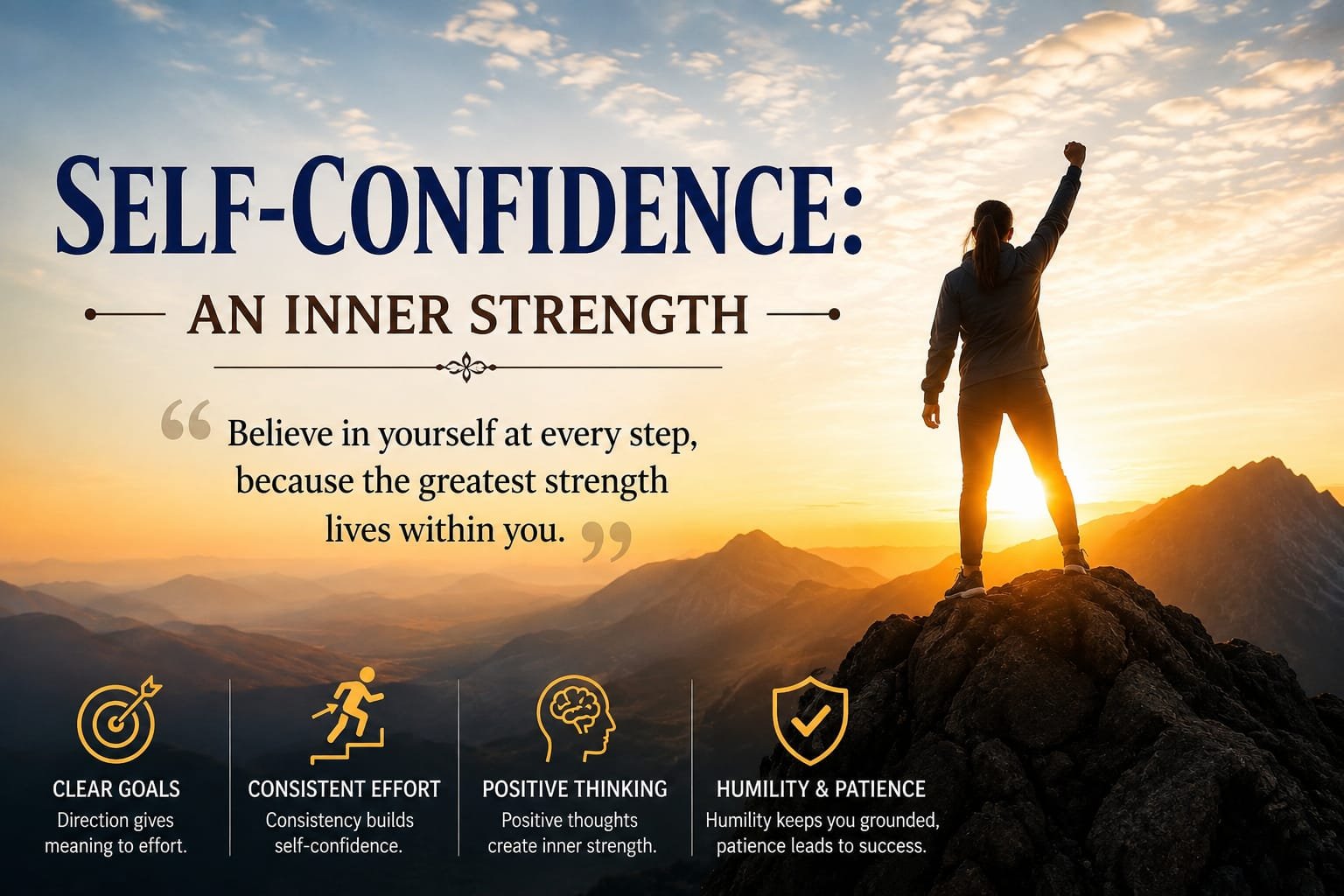
  • Self-Confidence: An Inner Strength

    Self-Confidence: An Inner Strength

    हिंदी में पढ़े : आत्मविश्वास एक आतंरिक शक्ति

    To move forward in life, we need many qualities such as continuous effort, patience, discipline, passion, and the determination never to give up. However, if one quality can be considered the foundation of all these qualities, it is self-confidence.

    Without self-confidence, a person cannot make full use of their abilities. They may have talent, dreams, and opportunities, but if they do not believe in themselves, they often hesitate to move forward according to their true potential.

    No one in the world—whether parents, friends, or relatives—can understand a person’s true potential as deeply as the person themselves can. A person alone can understand how much strength lies within them and how much they are capable of doing to turn their dreams into reality.

    This belief in one’s own abilities is what we call self-confidence.

    Self-confidence is not magic that can be acquired in a single day. It is an inner strength that develops gradually through continuous effort, the willingness to learn, experience, and faith in one’s actions.

    When a person keeps moving toward their goal, learns from their mistakes, and stands up again after failure, self-confidence begins to grow within them.

    Self-confidence does not mean that a person will never fail. Its real meaning is that even after failure, a person does not consider themselves completely incapable.

    The famous story associated with Arjuna in the Mahabharata provides an inspiring example of this. When Guru Dronacharya asked his disciples what they could see, Arjuna’s attention remained focused only on the target. His concentration teaches us that when a person is clear about their goal and works consistently toward it, their belief in their own abilities also becomes stronger.

    Although self-confidence is essential, it is equally important to keep it balanced.

    When self-confidence moves away from a realistic understanding of one’s abilities and circumstances and begins to make a person believe that they are infallible, it can take the form of overconfidence. This can become harmful.

    It is like a runner who is leading a long race but begins celebrating the victory before reaching the finish line. If they become careless and reduce their effort, the very person who could have secured first place may lose the competition within a few moments.

    Therefore, self-confidence must be accompanied by humility, wisdom, and continuous effort.

    True self-confidence does not teach a person:

    “I will win in every situation.”

    Instead, it gives them the belief:

    “I can make an honest effort, and even when difficulties arise, I can handle them.”

    Arunima Sinha is an inspiring example of self-confidence and determination. After losing a leg in an accident, she faced extremely difficult circumstances in life. But instead of surrendering to those circumstances, she chose a new goal.

    She resolved to climb Mount Everest and, after undergoing rigorous training and making relentless efforts, achieved that goal.

    Her story reminds us that circumstances are not always within our control, but our attitude toward them and the effort we make can change many things.

    Similarly, Dashrath Manjhi, popularly known as the “Mountain Man,” spent years working relentlessly to create a path through a mountain. His life is an example of how strong belief in a goal, combined with continuous effort, can produce extraordinary results.

    These examples demonstrate not only self-confidence but also patience, discipline, and persistent effort. That combination was their real strength.

    Self-confidence gives a person inner energy. It helps them maintain hope during difficult circumstances and motivates them to try again after failure.

    Often, every great goal begins not with an achievement, but with a small belief—

    “I can try.”

    This belief gradually gives consistency to effort. Consistency provides experience, experience strengthens ability, and the experience of one’s own growing ability deepens self-confidence.

    In this way, self-confidence is not merely the result of success; many times, it also becomes the foundation from which the journey toward success begins.

    History and society have seen many people whose ideas were initially considered impractical or unsuccessful. But with time, their efforts proved their abilities.

    Therefore, the opinions of others may be important, but recognizing one’s own abilities is equally important when deciding the direction of one’s life.

    Self-confidence is not a gift that one is simply born with. It is an inner strength acquired through continuous effort, experience, and struggle.

    It gives a person the courage to move beyond their limitations and the motivation to continue making efforts even in difficult circumstances.

    But self-confidence remains a strength only when it is connected with humility and wisdom. Self-confidence helps a person recognize their abilities, while overconfidence can make them forget their limitations.

    Ultimately, everyone faces a moment in life when they have to confront their inner doubts. At that moment, no matter how difficult the circumstances may be, a small inner voice can give them the strength to move forward again—

    “I believe in my abilities, and I will give my best effort.”

    Sometimes, changing your life does not require a miracle.

    It simply requires beginning to believe in yourself. 

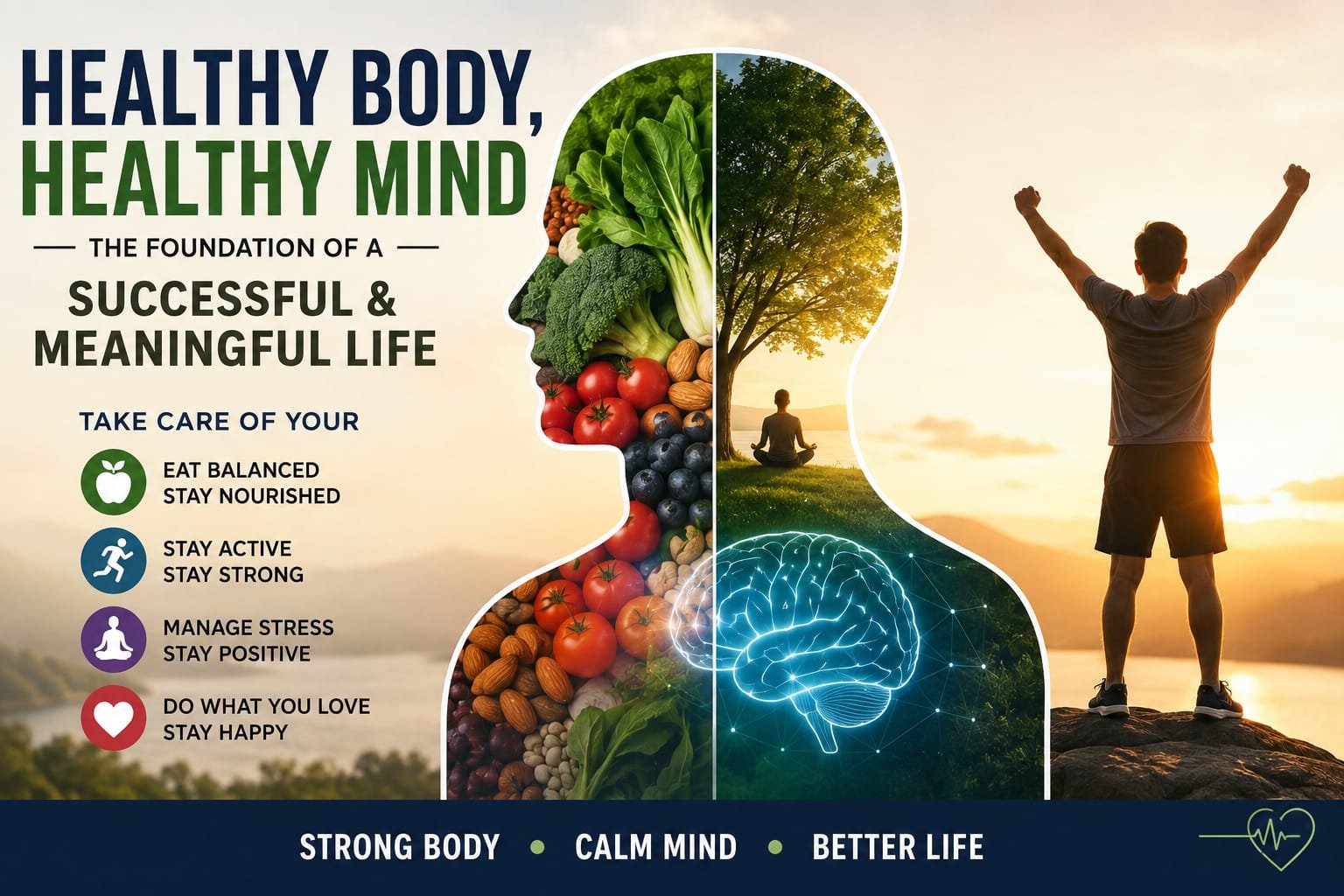
  • Healthy Body and Healthy Mind: The Foundation of a Successful and Meaningful Life

    Healthy Body and Healthy Mind: The Foundation of a Successful and Meaningful Life

    हिंदी में पढ़े : स्वस्थ तन एवं स्वस्थ मन: सफलता और खुशहाल जीवन का रहस्य

    We spend years building our careers, improving our finances, and planning for a better future. We work hard to achieve success, provide for our families, and create a comfortable life.

    Yet, in this pursuit of achievement, many of us overlook the very thing that makes all these accomplishments meaningful—our health.

    Health is one of the greatest assets a person can possess. However, many people associate health only with a strong body, an attractive appearance, or physical fitness. In reality, health is much broader than that.

    According to the World Health Organization (WHO), health is not merely the absence of disease but a state of physical, mental, and social well-being. A truly healthy life is one in which both the body and the mind function in harmony.

    After all, a healthy body alone cannot guarantee happiness, and a positive mindset alone cannot overcome every challenge. Real well-being emerges when we have the energy to live, the mental strength to cope, and the emotional balance to enjoy life.

    Modern life has made us more connected, productive, and ambitious than ever before. Yet it has also created new challenges.

    Work deadlines, academic pressure, financial responsibilities, family obligations, and constant digital stimulation leave little room for rest and recovery.

    As a result:

    – Eating habits become irregular.
    – Sleep is often sacrificed.
    – Physical activity decreases.
    – Stress and anxiety increase.
    – Mental and physical health gradually begin to suffer.

    This is why many people appear successful and healthy on the outside while silently struggling with exhaustion, stress, burnout, or emotional fatigue.

    We invest significant time and effort into building better careers and brighter futures. But if our body and mind are not healthy enough to enjoy those achievements, what is the true value of success?

    Physical health and mental health are deeply interconnected.

    When the mind remains under constant stress, it can affect sleep quality, energy levels, concentration, motivation, and overall well-being. Likewise, long-term physical health challenges can influence mood, confidence, emotional stability, and mental resilience.

    This relationship reminds us that health is not simply about avoiding illness. It is about maintaining balance between our physical condition and our mental state.

    Ignoring one often affects the other.

    For this reason, caring for the body and caring for the mind should never be viewed as separate goals. They are two parts of the same foundation.

    The journey of renowned Indian rapper and musician Yo Yo Honey Singh serves as an inspiring reminder that mental health challenges can affect anyone, regardless of fame, wealth, or success.

    Through public interviews and personal reflections, he has spoken openly about difficult periods in his life and the struggles he faced behind the scenes.

    There was a time when he stepped away from his career to focus on treatment, recovery, and rebuilding himself. Rather than allowing his struggles to define him, he chose to confront them.

    Family support, professional help, patience, and perseverance played important roles in his recovery journey. Eventually, he returned to the music industry and re-established his presence in the public eye.

    His story teaches us an important lesson:

    Struggling is not weakness. Refusing to give up is strength.

    Life inevitably brings challenges, but healing, seeking help, and moving forward remain possible even during the most difficult periods.

    Food is more than fuel. It influences our energy, focus, mood, and overall health.

    A balanced diet that includes fruits, vegetables, whole grains, legumes, proteins, and other nutritious foods can support both physical and mental well-being.

    Healthy eating does not require perfection. It requires consistency.

    The goal is not to eliminate every favorite food but to create sustainable habits based on balance, moderation, and awareness.

    Because long-term health depends not only on what we eat, but also on when we eat, how much we eat, and how consistently we maintain healthy habits.

    2. Move Your Body Regularly

    The human body is designed for movement.

    Regular physical activity can help improve fitness, increase energy, reduce stress, and enhance overall well-being.

    Exercise does not have to mean spending hours in a gym. Walking, running, cycling, swimming, yoga, dancing, or any enjoyable physical activity can provide meaningful benefits.

    The most effective exercise routine is often the one that becomes a regular part of everyday life.

    Consistency matters more than intensity.

    3. Make Time for What Brings You Joy

    Life should not become a never-ending cycle of responsibilities.

    Many people schedule meetings, deadlines, and obligations but rarely schedule time for themselves.

    Listening to music, reading books, gardening, painting, watching films, playing an instrument, or pursuing any personal interest can provide emotional relief and mental renewal.

    A life filled only with responsibilities may appear productive.

    But productivity alone does not create fulfillment.

    True well-being requires moments of joy, creativity, curiosity, and personal expression.

    Making time for the things you love is not a luxury—it is an investment in your mental health.

    People often say:

    «”A healthy mind lives in a healthy body.”»

    There is certainly wisdom in this statement because the body and mind constantly influence one another.

    However, I believe there is another perspective worth considering.

    When the mind becomes healthy, balanced, and optimistic, people often become more motivated to care for their physical health. They exercise more consistently, make healthier choices, sleep better, and develop greater self-discipline.

    Conversely, when someone is overwhelmed by stress, hopelessness, or emotional exhaustion, maintaining healthy habits can become far more difficult—even when they know those habits are important.

    So perhaps the question is not:

    Which should come first—the body or the mind?

    Perhaps the better question is:

    Can we strengthen both together?

    The answer is yes.

    Sometimes physical health supports mental well-being.

    Sometimes mental resilience inspires better physical health.

    Neither exists in complete isolation.

    The healthiest life is often built when both are nurtured side by side.

    Society often measures success through income, status, possessions, achievements, and recognition.

    Yet success becomes difficult to enjoy when health begins to deteriorate.

    What value is professional achievement if stress prevents us from enjoying it?

    What value is financial success if poor health prevents us from living fully?

    Perhaps true success is not simply the ability to achieve more.

    Perhaps it is the ability to enjoy what we have achieved.

    A healthy body gives us the energy to pursue our goals.

    A healthy mind gives us the wisdom to appreciate them.

    For this reason, health should not be viewed as something separate from success.

    Health is the foundation upon which lasting success is built.

    Health is not a destination that we reach once and keep forever.

    It is an ongoing process that requires attention, awareness, and daily effort.

    We must learn to care for our bodies, understand our minds, acknowledge our emotions, and create space for the activities that bring meaning and happiness into our lives.

    Let us not sacrifice our well-being in the pursuit of success.

    Because life is not only about earning more, achieving more, or becoming more successful.

    It is also about experiencing life with energy, peace, gratitude, and purpose.

    If you found this article valuable, consider sharing it with your friends and family.

    A simple message shared at the right time can encourage someone to take better care of their health, pay attention to their mental well-being, and make a positive change in their life.

    Sometimes, changing a life does not require a grand speech.

    Sometimes, it begins with a single meaningful reminder.

  • Love: A Powerful Emotion

    Love: A Powerful Emotion

    हिंदी में पढ़े : प्रेम : एक शक्तिशाली एहसास

    Love is one of the most beautiful and powerful emotions in human life. It is a feeling that can completely transform a person’s life. Love has such immense power that it can give a broken person hope to live again, and sometimes, the very same love can also make a person experience the deepest of sorrows.

    People often associate love only with the relationship between two romantic partners, but in reality, the meaning of love is far broader than that.

    When we are born into this world, the first thing we experience is the selfless love of a mother and the affection of a father. This very love gives us a sense of security, belonging, and our first lessons in life.

    As we grow older, many forms of love enter our lives. Affection for friends, the bond between siblings, the companionship of a life partner, the warmth of family, and even devotion to a purpose or to God can all be forms of love.

    Love has no boundaries, nor can it be confined to a single relationship.

    Many people believe that love means attaining the person or thing they desire. But true love is not simply about getting what we want. Sometimes, sacrificing our own desires for someone else’s happiness can be the most beautiful form of love.

    When we want to see someone happy without any selfish motive, we come closest to experiencing true love.

    According to psychology, love is not merely an emotion; it also has a profound impact on our mental and emotional well-being.

    Love gives us confidence, reduces loneliness, and inspires us to move forward in life. That is why love is considered one of the most important emotions in human life.

    Attraction often changes with time, but true love stands on the foundation of trust, respect, understanding, and devotion.

    Where there is only selfishness, love does not last for long. But where there is trust and a selfless feeling, love grows deeper with time.

    The most beautiful form of love is one in which there are no expectations.

    A mother’s love for her child is the greatest example of this. Without any conditions, she remains devoted to her child’s happiness, safety, and future.

    This selfless feeling helps us understand the true meaning of love.

    Think about the people in your life whose love and affection have supported you during difficult times.

    Perhaps they are your parents, a friend, a romantic partner, your life partner, or simply someone who stood by you without any selfish motive. 


  • Childhood: The Most Beautiful Phase of Life

    Children enjoying their childhood on a countryside path at sunset.

    हिंदी में पढ़े : बचपन जिंदगी का सबसे खूबसूरत दौर

    Childhood is that golden period of our lives which we can never forget. At that time, there was no worry about the future and no burden of responsibilities. Our world was limited to our school, friends, family, and little joys. Perhaps this is why childhood memories remain so close to our hearts even as we grow older.

    Grandparents’ home, summer afternoons, playing with siblings, spending time with friends, running around without any worry, and laughing with family—these are the childhood memories that bring a smile to our faces whenever we remember them. At that time, even the smallest things gave us immense happiness. Sometimes climbing trees, sometimes racing with friends, and sometimes sitting with the family and laughing together—these little moments later become some of our most precious memories.

    According to psychology, childhood experiences deeply influence our personality. The love, affection, and togetherness we experience with our family during childhood make us emotionally stronger. These experiences later influence the way we think, understand things, and maintain relationships.

    Scientific research suggests that childhood memories remain preserved in our brains for a long time. When we go through stress or difficult situations in life, remembering these memories can give us comfort and positive energy.

    Growing up does not mean that we should lose the child within us. The curiosity, enthusiasm, and habit of finding happiness in little things help us remain happy in life.

    Many times, looking at old photographs, talking about childhood friends, or remembering old family stories makes our hearts feel lighter. These little moments once again make us feel the same happiness that we experienced in childhood.

    Childhood never comes back, but its memories always remain with us. These memories often give us courage during difficult times and inspire us to look at life from a positive perspective. Perhaps you have also experienced that when your mind becomes tired, a sudden childhood memory brings a smile to your face. This is perhaps the greatest beauty of childhood memories.

    Take a few minutes today and remember those childhood memories that gave you the most happiness. Perhaps some of those memories will once again bring you the same joy and smile that we often keep searching for in our busy lives.

  • Human Life: A Priceless Journey

    Human life is a priceless journey over which no individual has any control. This journey begins with birth and culminates in death. The entire span in between, gifted to us by nature, unfolds just like a beautiful movie.

    God has provided humans with every essential thing on this earth to make his life simple, smooth, and blissful. Yet, the irony remains that humans constantly trap themselves in the web of their own internal greed, Blinded by the external glamour.

    we often forget the true joy of living. Only the person who conquers these inner vices and disciplines their mind can understand the real worth of this life. Such an awakened soul ultimately becomes one with this beautiful nature and attains boundless peace.